The Data Behind Aviation’s Training Revolution
The aviation industry has reached a pivotal moment. With a global pilot shortage looming and training costs soaring, flight schools are turning to artificial intelligence to transform how we train the next generation of aviators. But beyond the tech hype, what does the data actually tell us about AI’s impact on pilot training?
The Numbers Don’t Lie: AI is Already Delivering Results
Flight schools implementing AI-enhanced training systems are seeing remarkable improvements that directly impact their bottom line. Recent studies show 35% better student retention rates and 25% faster time-to-certification for programs using AI-powered training methods. Even more impressive, students are achieving solo flight readiness up to 30% faster than those in traditional programs.
These aren’t theoretical benefits. Virtual reality training combined with AI has demonstrated the ability to reduce training completion time from one year to just four months in military applications, while slashing costs from $4.5 million for legacy simulators to just $1,000 per VR headset setup.
How AI Transforms the Learning Experience
Modern AI training systems work by analyzing massive amounts of student performance data, including reaction times, control inputs, and even biometric stress indicators. This creates what researchers call “micro-adaptive learning pathways” that adjust to each student’s unique learning style and pace.
Think of it as having a flight instructor who never gets tired, never misses a detail, and remembers exactly how you performed on every maneuver you’ve ever attempted. The AI system continuously refines its approach based on your specific strengths and areas needing improvement.
Personalized Emergency Training
One of AI’s most significant contributions lies in emergency procedure training. Traditional training can only expose students to a limited number of emergency scenarios due to safety and cost constraints. AI-powered simulators can generate thousands of unique emergency situations, preventing students from simply memorizing responses and instead developing genuine understanding of underlying principles.
The Safety Factor: Predictive Training That Prevents Problems
Perhaps most importantly, AI systems are proving their worth in safety enhancement. These systems analyze training patterns to identify which pilots might struggle with specific procedures before problems manifest in real-world flying. This predictive capability represents a fundamental shift from reactive to proactive safety management.
Students trained with AI-enhanced systems consistently demonstrate improved decision-making skills, better stress management, and faster adaptation to new aircraft types. The technology excels at creating realistic scenarios that would be too dangerous or expensive to replicate in traditional training environments.
Real-World Implementation: Who’s Leading the Charge
Major training organizations are already embracing this technology. Companies like CAE, FlightSafety International, and Delta Air Lines have integrated AI into their training programs with measurable success. Innovative companies like Paladin AI are providing data-driven analytics for adaptive pilot training, while TakeFlight Interactive offers immersive training solutions that bridge the gap between simulation and reality.
The momentum is building industry-wide, with 80% of aviation training companies expected to implement some form of AI in their programs by 2025.
The Economic Reality for Flight Schools
While the benefits are compelling, flight school owners naturally want to understand the return on investment. The financial case for AI becomes clear when you consider the combined impact of reduced aircraft usage, more efficient instructor utilization, and shorter training timelines.
VR-based AI training also democratizes aviation education by enabling high-quality instruction in locations that previously couldn’t support expensive physical simulators. This accessibility expands your potential student base while reducing facility requirements and overhead costs.
Addressing the Challenges
Implementing AI training systems isn’t without hurdles. Extended reality technologies can cause cybersickness, visual fatigue, and ergonomic strain if not properly managed. Additionally, AI systems require substantial amounts of student performance data, raising important questions about data protection and privacy that schools must address through robust governance practices.
The Human Element Remains Critical
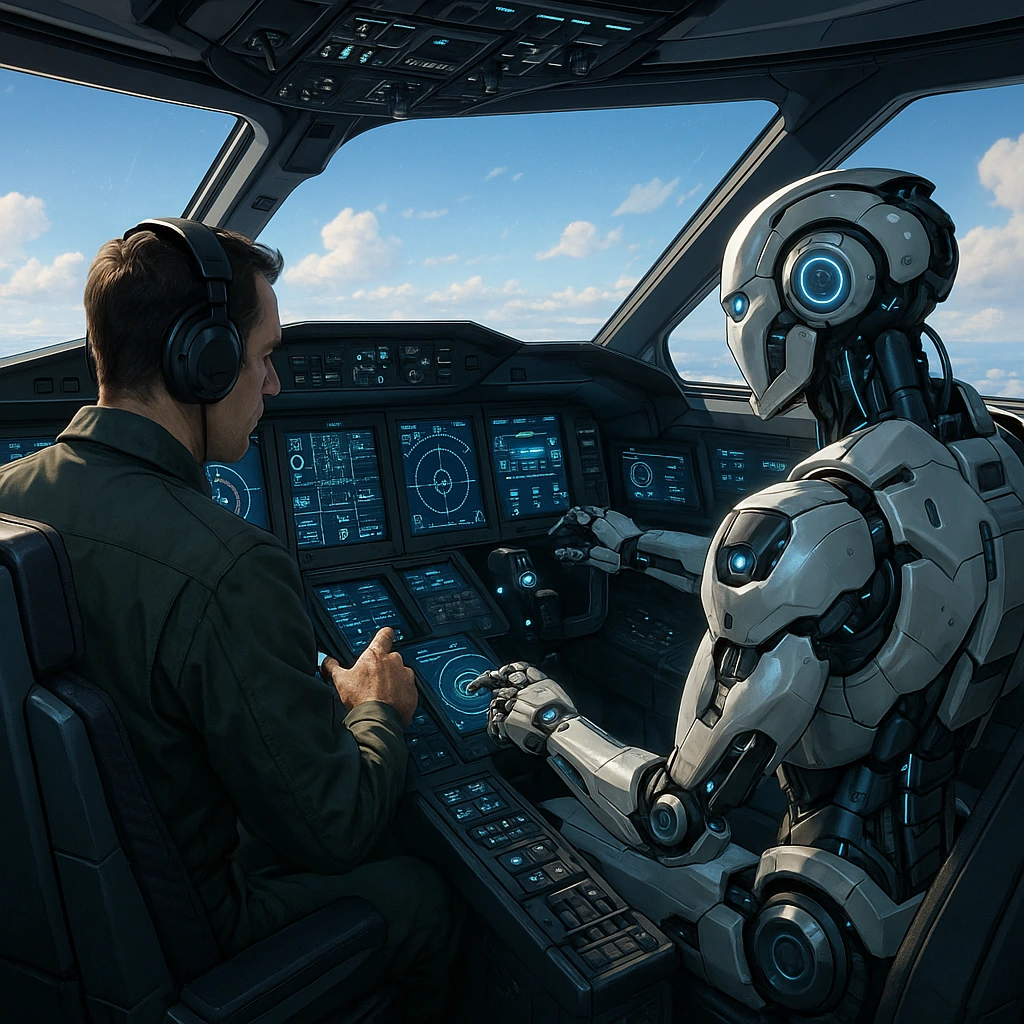
It’s crucial to understand that AI doesn’t replace human flight instructors – it amplifies their effectiveness. The technology handles routine data analysis and pattern recognition, freeing instructors to focus on mentorship, complex decision-making guidance, and the wisdom that comes from real-world flying experience.
Modern AI systems provide instructors with detailed performance analytics and personalized training recommendations, enabling more targeted and effective instruction. Students still need human instructors for complex judgment calls, emotional support, and the nuanced aspects of aviation that technology cannot replicate.
Strategic Implementation for Flight Schools
Success with AI training requires a thoughtful, phased approach. Start with pilot programs focusing on specific training modules where AI can demonstrate clear value, such as instrument procedures or emergency training. This allows you to measure results and refine processes before broader implementation.
Consider partnerships with established AI training providers rather than developing systems in-house. Companies like Loft Dynamics offer proven VR helicopter training solutions, while emerging platforms provide specialized training modules that can integrate with existing curricula.
The Urgent Context: Addressing the Pilot Shortage
The global aviation industry faces a critical challenge, with projections calling for 649,000 to 674,000 new pilots between 2024 and 2043. This shortage creates additional urgency for training efficiency improvements. AI-enhanced programs help address this crisis by producing competent pilots more quickly and cost-effectively than traditional methods alone.
For flight school marketing professionals, this represents a significant opportunity to differentiate your programs and attract students seeking the most advanced, efficient training available.
The Verdict: Data-Driven Training Excellence
The evidence overwhelmingly supports AI’s ability to enhance pilot training outcomes. Students demonstrate improved retention, faster skill acquisition, better decision-making capabilities, and increased safety awareness. However, success depends on thoughtful implementation that maintains focus on core aviation competencies while preserving essential human elements of flight instruction.
The question for flight school owners isn’t whether AI can improve pilot training – the data clearly demonstrates it can. The real question is how quickly you can effectively integrate these technologies to remain competitive in an industry where technological advancement increasingly defines training quality and operational success.
The future of pilot training is here, powered by the intelligent integration of artificial intelligence with proven aviation education principles. Schools that embrace this evolution while maintaining their commitment to safety and professionalism will find themselves well-positioned to meet the growing demand for skilled pilots in our increasingly complex aviation environment.
For a deeper dive into how AI is transforming pilot training listen to our podcast episode on How Take Flight Interactive Is Revolutionizing Flight Training with AI where we explore the latest innovations and their implications for flight schools.
For more insights on aviation marketing and industry trends, visit Right Rudder Marketing and explore how we help flight schools communicate their competitive advantages in this rapidly evolving landscape.